
QUASR Advances Collaboration Through Joint Biomechanics Research

Strengthening Collaboration in Orthopaedic Research
In 2021, Prof. Ashish Gupta highlighted the ongoing collaborative efforts to advance shoulder and orthopaedic research through the Queensland Unit for Advanced Shoulder Research (QUASR) and its association with the ARC Industrial Transformation and Training Centre for Joint Biomechanics.
The initiative brought together Queensland University of Technology (QUT), university and industry partners, clinicians and researchers, with a shared focus on advancing research and improving orthopaedic outcomes.
A Collaborative Approach to Joint Biomechanics
The ARC Industrial Transformation and Training Centre for Joint Biomechanics represented a significant collaborative research initiative involving academic institutions, healthcare professionals and industry organisations.
Prof. Ashish Gupta congratulated QUT and its university and industry partners, acknowledging the contributions of the researchers and collaborators involved in bringing the initiative to fruition. He also recognised the leadership of Yuantong Gu and the contributions of the wider research team, including Kenneth Cutbush and Jashint Maharaj.
The initiative reflected the importance of bringing together different areas of expertise to address complex challenges in musculoskeletal and orthopaedic research.
QUASR Expands Its Shoulder Research Team at QUT
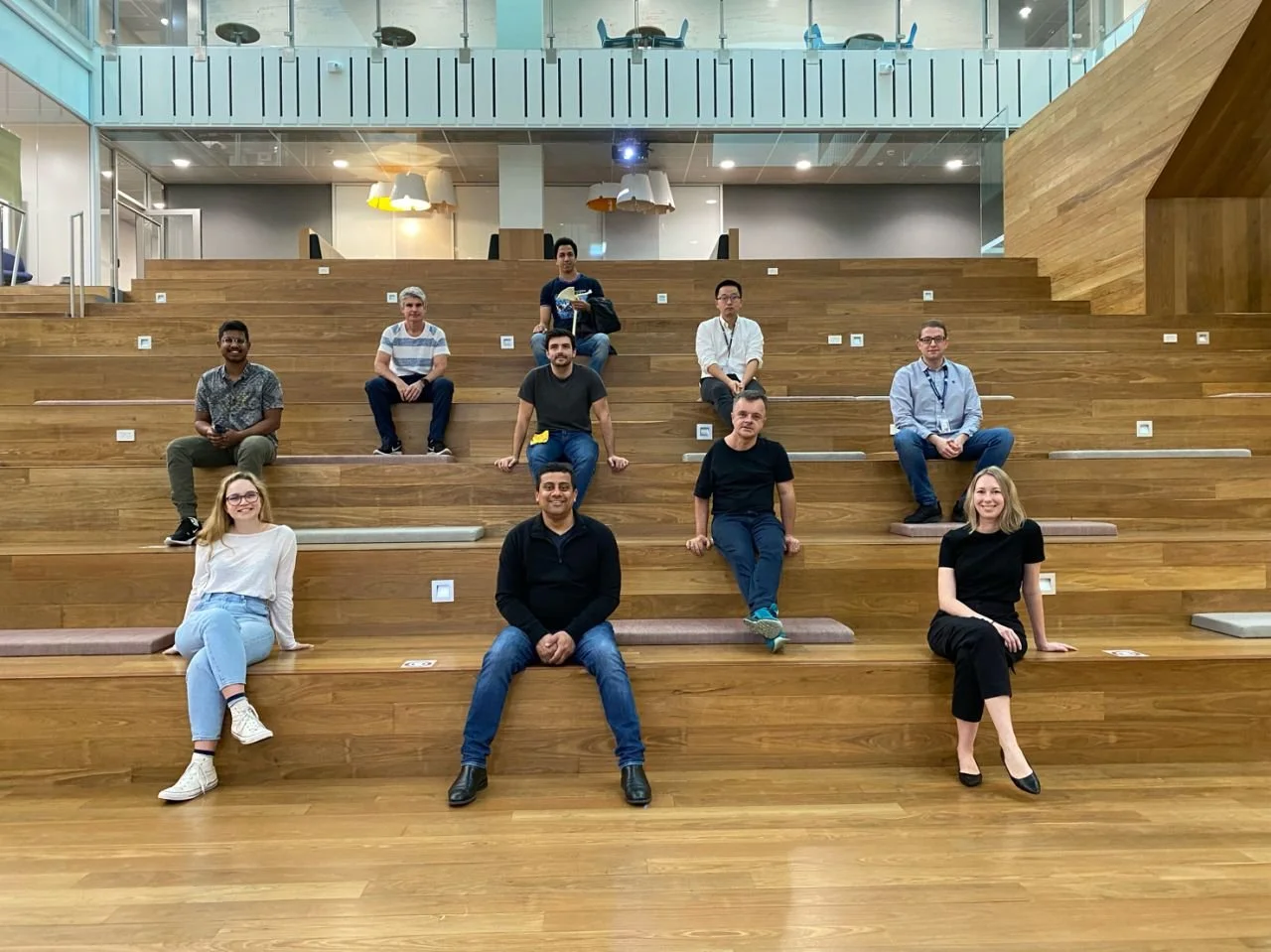
QUASR continued to strengthen its research activities at Queensland University of Technology (QUT), with new facilities and a growing team of more than 50 dedicated shoulder researchers.
The initiative brought together researchers, clinicians and technology specialists working across different areas of shoulder research. QUASR also highlighted opportunities for PhD and postdoctoral researchers interested in contributing to innovation and advancing shoulder science.
The announcement recognised the contributions of industry and research partners, including Zimmer Biomet, Stryker and Materialise, in supporting the wider shoulder research community.
A Dedicated Facility for Advancing Shoulder Research
QUASR continued to strengthen its research capabilities through the development of a multimillion-dollar dedicated facility at Queensland University of Technology (QUT). Supported by a team of more than 50 researchers, the facility aimed to advance research into shoulder conditions and contribute to improved patient outcomes.
The initiative was supported by the Australian Research Council (ARC) and a network of research, clinical and industry partners, including NeuRA Foundation, The University of Queensland, Greenslopes Private Hospital, Stryker, Zimmer Biomet, AusBiotech, Logemas, Queensland Radiology Specialists and Queensland X-Ray.
Through this collaborative research environment, QUASR and the ARC Training Centre for Joint Biomechanics sought to bring together expertise in biomechanics, clinical research and technology to support real-world research and develop the next generation of researchers.
Advancing Research Through Technology and Innovation
The research programme encompassed several technical and scientific disciplines, including:
Biomechanics and musculoskeletal modelling
Mechatronics
Kinematic analysis
Three-dimensional (3D) printing
These research areas offer opportunities to investigate joint function, understand biomechanical challenges and explore technological approaches that may contribute to advances in orthopaedic treatment and care.
Developing a Robotic Assistant for Shoulder Arthroplasty
One of the key initiatives associated with QUASR and the ARC Industrial Transformation Training Centre for Joint Biomechanics involved developing a robotic assistant for shoulder replacement surgery.
Shoulder arthroplasty presents several technical challenges for robotic surgery, including restricted access during bone reaming, surgical ergonomics, movement of the surgical target and the time required to perform procedures. The research team explored a staged approach to addressing these challenges and supporting greater precision in surgical planning and execution.
The first milestone focused on using a graphical user interface (GUI) to specify target areas for key surgical tasks, including glenoid burring, humeral cutting and drilling, as well as implant positioning. The next planned stages involved using a drill and cutting tools on simulated bone, alongside integration with modelling and sensing research.
The project brought together engineering and clinical expertise, with Prof. Ashish Gupta contributing surgical insights following the team's observations and discussions in the operating theatre. The work also involved researchers Peter Pivonka and Saulo Martelli, along with engineers from QUT's Research Engineering Facility.
This milestone represented an important step in exploring how robotics, modelling and sensing technologies could contribute to the future of shoulder replacement surgery.
Progress in QUASR's Shoulder Robotics Project
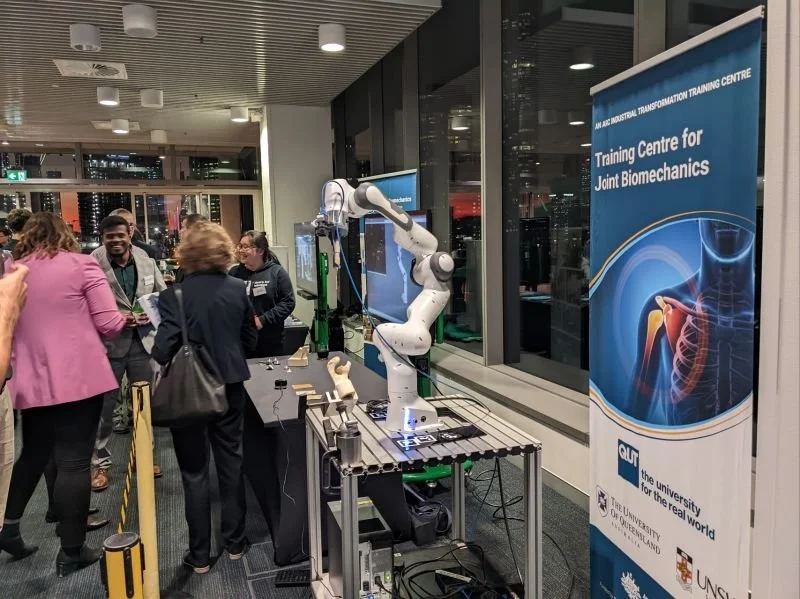
QUASR continued to advance its shoulder robotics project under the leadership of Michael Milford, highlighting progress in the application of robotics, computer vision and mixed reality to shoulder surgery.
The project was also showcased during celebrations marking the launch of the ARC Laureate Fellowship awarded to Prof. Michael Milford. As a Chief Investigator and supervisor within the ARC Training Centre for Joint Biomechanics, Michael's involvement supports collaboration between robotics researchers, engineers and the wider orthopaedic research community.
The showcase highlighted the collaborative work taking place to explore the potential of surgical robotics in advancing shoulder surgery.
Connecting Universities, Clinicians and Industry
A key aspect of the initiative was collaboration between academic researchers, clinicians, hospitals and industry partners. Organisations acknowledged in the announcement included Greenslopes Private Hospital, Zimmer Biomet, Wright Medical, AusBiotech, Surgical Specialties, Logemas and Materialise.
This collaborative model aimed to connect research expertise with clinical and industry perspectives, supporting the development of knowledge and technologies relevant to orthopaedic practice.
Supporting the Next Generation of Researchers
The 2021 announcement also highlighted opportunities for PhD and postdoctoral researchers in biomechanics, modelling, mechatronics, kinematic analysis and 3D printing.
Regular monthly team meetings also provided opportunities for researchers to present their work, exchange ideas and learn from colleagues across different disciplines. The ARC Training Centre highlighted the contributions of researchers Arun Jolly and Ahmed Sewify, who presented their work during one of these sessions. This collaborative research culture encouraged knowledge sharing and supported the development of emerging researchers.
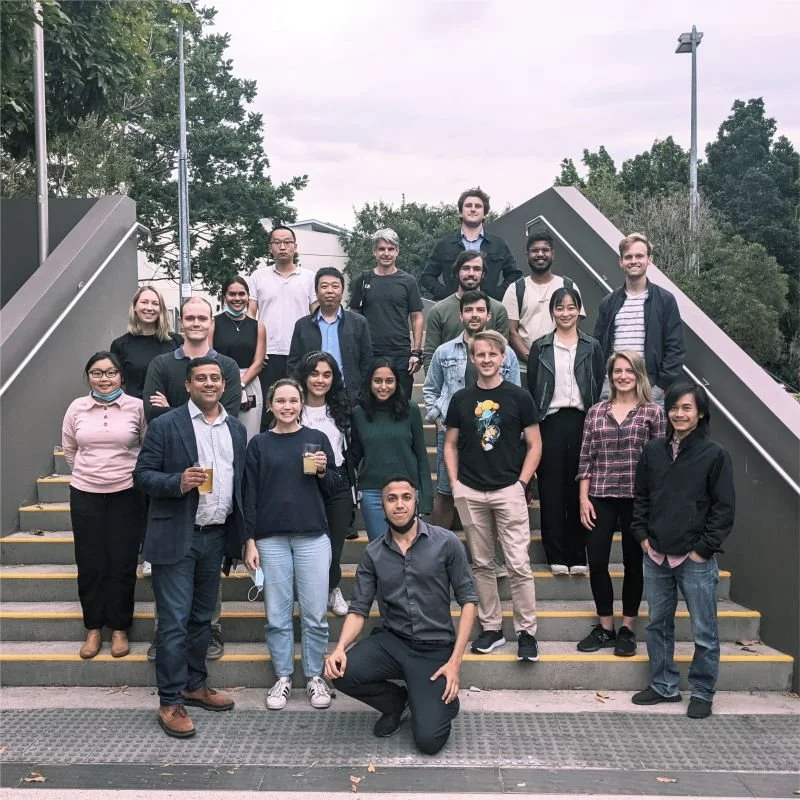
These opportunities reflected the centre's commitment to developing research capability and encouraging collaboration across disciplines. By bringing together emerging researchers, experienced academics, clinicians and industry professionals, the initiative aimed to support the next generation of expertise in joint biomechanics.
The work highlighted the value of long-term partnerships in advancing orthopaedic research and exploring new approaches to improving patient outcomes.
Original LinkedIn update: Read Prof. Ashish Gupta's LinkedIn post about the Joint Biomechanics Centre.
Related LinkedIn update: Read the ARC Training Centre's post about the QUASR research facility.
Related LinkedIn update: Read Ashish Gupta's post about QUASR's research team.
Related LinkedIn update: Read the post about QUASR's collaborative research team
Related LinkedIn update: Read Ashish Gupta's post about QUASR's shoulder robotics project.