
Reverse Shoulder Arthroplasty: Understanding the Evolution of Modern Shoulder Replacement
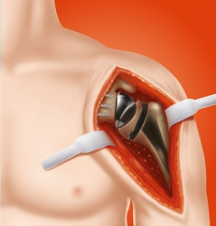
Reverse Shoulder Arthroplasty (RSA) has become an important surgical option for treating complex shoulder conditions, particularly when conventional shoulder replacement may not provide the desired results. Over the years, developments in implant design, biomechanics and surgical techniques have helped expand its clinical applications.
A 2023 review published in the Journal of ISAKOS, co-authored by Prof Ashish Gupta and an international team of orthopaedic researchers, explores the evolution of Reverse Shoulder Arthroplasty, its clinical applications, implant design developments and the challenges that continue to shape its future.
Understanding Reverse Shoulder Arthroplasty
The concept of Reverse Shoulder Arthroplasty was developed by Paul Grammont in 1985. Unlike traditional shoulder replacement, which maintains the natural ball-and-socket arrangement, reverse shoulder replacement switches the positions of the ball and socket.
This design changes the biomechanics of the shoulder, allowing the deltoid muscle to play a greater role in lifting the arm, particularly in patients with significant rotator cuff dysfunction.
The original Grammont design addressed limitations associated with earlier reverse shoulder prostheses by changing the position of the centre of rotation, improving implant stability and clinical outcomes.
Expanding Clinical Applications
Initially, Reverse Shoulder Arthroplasty was primarily used to treat cuff tear arthropathy. However, its applications have gradually expanded.
Today, RSA is also considered for selected patients with:
Irreparable massive rotator cuff tears.
Displaced proximal humeral fractures.
Complex shoulder conditions where conventional replacement may be unsuitable.
These expanded applications demonstrate how advances in shoulder replacement technology have influenced treatment approaches for complex shoulder disorders.
Advances in Implant Design
One of the important areas explored in the review is the evolution of reverse shoulder implant designs.
Changes to glenoid positioning, glenosphere inclination and version, and humeral component configuration can influence shoulder biomechanics and postoperative function.
The review discusses several design considerations, including:
Glenoid lateralisation: Adjusting the position of the glenoid component to influence shoulder mechanics.
Humeral configuration: Changes in the neck-shaft angle and implant design to improve functional outcomes.
Glenosphere positioning: The position and orientation of the glenosphere can influence range of movement and implant performance.
Inlay and onlay configurations: Different humeral implant configurations can affect the mechanics of the reconstructed shoulder.
The authors highlight the potential biomechanical advantages of a lateralised glenoid combined with a 135-degree inlay humeral configuration.
Challenges and Complications
Despite significant advancements, Reverse Shoulder Arthroplasty continues to present clinical challenges.
Two commonly recognised issues include:
Scapular notching: Contact between the humeral component and the scapular neck, which can contribute to bone erosion.
Limited external rotation: Some patients experience restrictions in rotational movement following surgery.
Implant design, component positioning and individual patient anatomy all contribute to postoperative function.
Reducing complications while improving shoulder movement remains an important consideration in the continued development of RSA.
Future Directions in Reverse Shoulder Arthroplasty
The review also identifies several areas requiring further research and development.
These include improving implant designs to reduce bone adaptation and revision rates, developing more effective strategies to prevent infection, and improving postoperative internal and external rotation.
Further research is also needed to improve clinical outcomes in patients undergoing RSA for humeral fractures and revision shoulder arthroplasty.
As implant technology and surgical planning continue to evolve, ongoing research will play an important role in advancing shoulder reconstruction.
Advancing Shoulder Research Through Collaboration
The development of Reverse Shoulder Arthroplasty demonstrates how research, biomechanical understanding and surgical innovation can contribute to improvements in orthopaedic care.
Through research and international academic collaboration, QUASR continues to highlight developments in shoulder surgery and contribute to the wider exchange of orthopaedic knowledge.
Read the Original Research
This article is based on the 2023 review published in the Journal of ISAKOS:
Reverse Shoulder Arthroplasty: State-of-the-Art
Authors: Francesco Franceschi, Edoardo Giovannetti de Sanctis, Ashish Gupta, George S Athwal and Giovanni Di Giacomo.
Read the full research publication on PubMed.
This article is an overview of published research and is intended for educational and informational purposes.