
Revision Shoulder Arthroplasty Is on the Rise: Are We Prepared for the Challenges Ahead?
Understanding the Growing Demand for Complex Revision Surgery
Revision shoulder arthroplasty is becoming an increasingly important challenge in modern shoulder surgery. As shoulder replacement procedures are performed in more patients and for a wider range of conditions, the need to manage failed implants and complex revision cases is also growing.
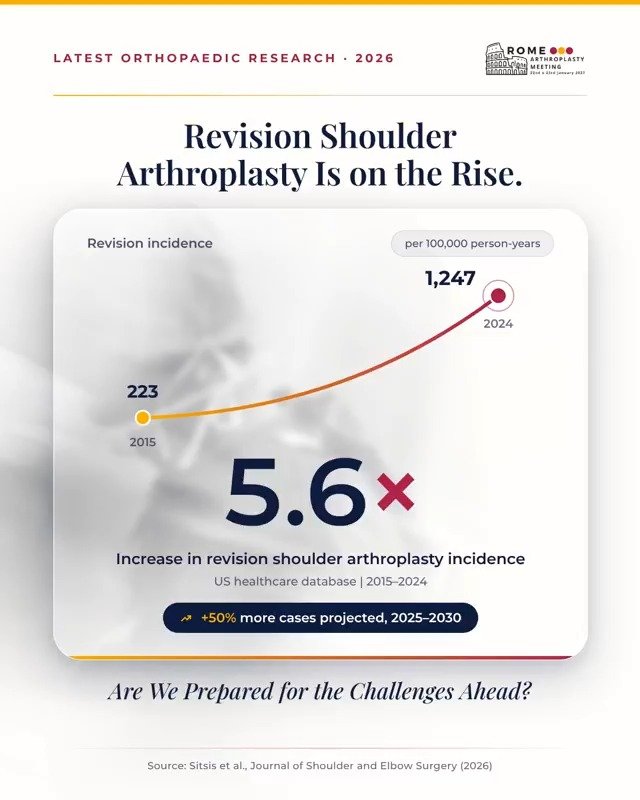
A 2026 study published in the Journal of Shoulder and Elbow Surgery reported a 5.6-fold increase in the incidence of revision total shoulder arthroplasty between 2015 and 2024. Drawing on data from 67 US healthcare organisations, the study identified 70,349 patients who underwent revision surgery. Its forecasts projected a further increase of more than 50% in revision cases between 2025 and 2030.
These findings highlight the growing revision burden and raise an important question for the orthopaedic community: are we prepared for the challenges ahead?
The Impact of Reverse Shoulder Arthroplasty
Reverse shoulder arthroplasty is being used in more patients and for broader indications. As its use expands, understanding the long-term performance of implants and the potential need for revision becomes increasingly important.
Revision surgery can be considerably more complex than primary shoulder replacement. Previous procedures, changes in anatomy and compromised bone or soft tissues can all influence the available treatment options.
Four Major Challenges in Revision Shoulder Arthroplasty
1. Bone Loss and Complex Reconstruction
Bone loss around the humeral or glenoid components can make revision surgery particularly challenging. The location and extent of bone deficiency influence implant fixation and reconstruction options.
Managing these cases may require specialised reconstructive techniques and careful assessment of the remaining bone.
2. Implant Loosening and Instability
Implant loosening and instability are important complications that may lead to revision surgery. Identifying the underlying cause is essential when planning further treatment.
Assessment may involve implant positioning, bone support, joint mechanics and the condition of the surrounding soft tissues.
3. Infection Management
Infection involving a shoulder replacement requires careful investigation and treatment planning. Decisions depend on the nature of the infection, the implant and the condition of the surrounding tissues.
4. Long-Term Implant Performance and Surgical Planning
Revision procedures require a detailed understanding of the existing implant, remaining bone stock and soft-tissue condition.
Preoperative assessment and planning are important for anticipating potential difficulties and determining an appropriate reconstruction strategy.
Preparing for the Growing Revision Burden
Meeting the increasing demand for revision shoulder arthroplasty requires more than surgical volume. It calls for specialised expertise, evidence-based decision-making, continued clinical education and collaboration between surgeons and researchers.
At the Queensland Unit for Advanced Shoulder Research (QUASR), research, collaboration and the exchange of clinical knowledge contribute to ongoing discussions about complex shoulder conditions and surgical challenges.
As revision procedures become a greater part of shoulder practice, sharing experience and examining difficult cases will remain important for the orthopaedic community.
Continuing the Discussion at ROME 2027
These challenges will be part of the discussion at ROME 2027, where surgeons from across the international orthopaedic community will come together to examine real revision cases and openly debate the complexities of revision shoulder surgery.
Event details:
Dates: 22–23 January 2027
Venue: Link Campus University, Rome
View ROME 2027 event information
The growing revision burden makes continued research, specialised expertise and professional education essential topics for the future of shoulder arthroplasty.
Read the original LinkedIn post to view the discussion that inspired this article.